What Actually Goes Into a Great Video Podcast
Video podcasts are having a moment. More companies are asking for one every month — but a lot of them start the conversation the same way:
"We just need a camera and two chairs."
That's not quite right. Here's what actually goes into a video podcast that holds up.
Location Sets the Tone Before Anyone Says a Word
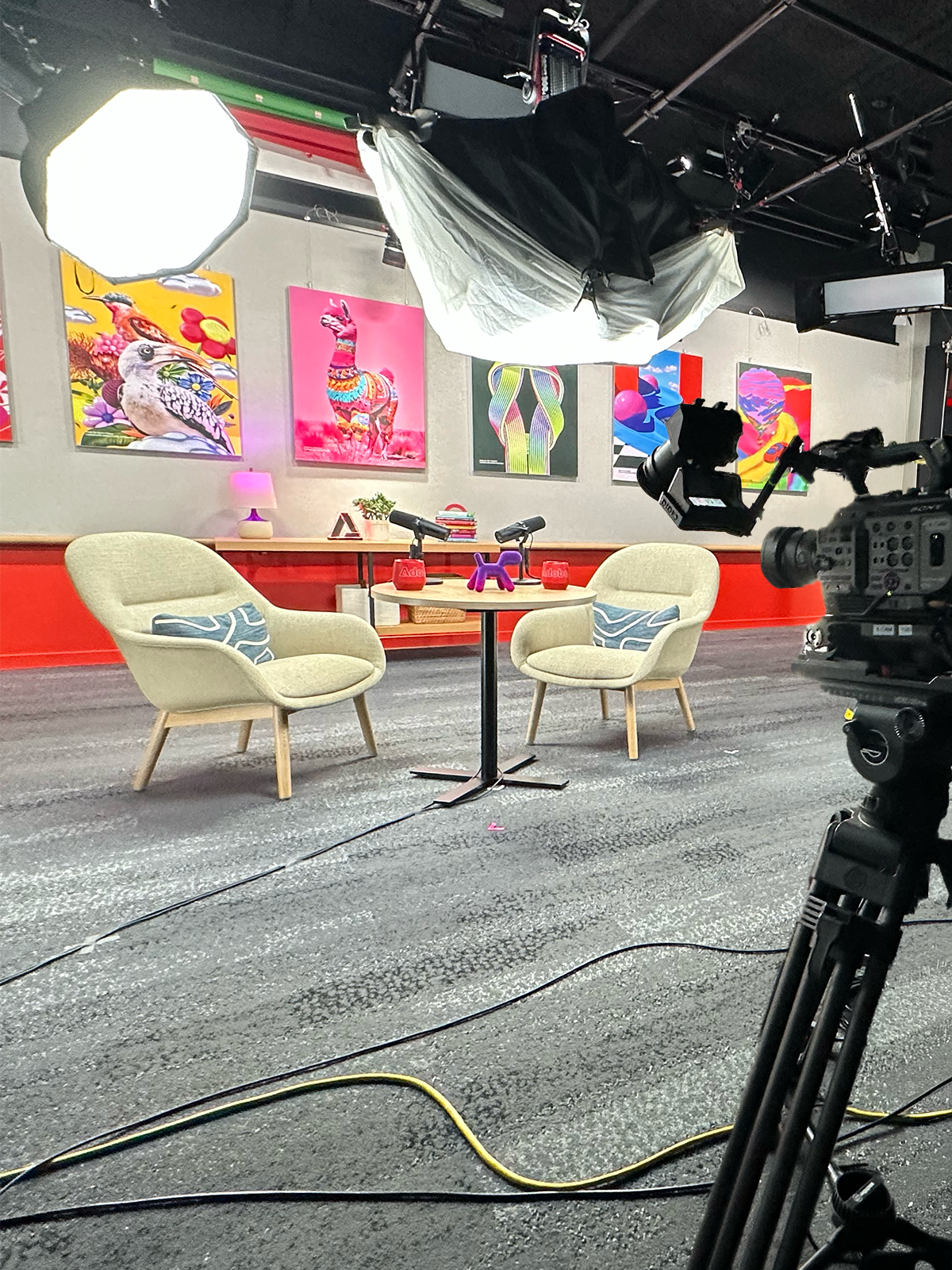
The room isn't neutral — it's part of the brand.
A generic conference room reads as generic. The energy of the space, the way light falls, whether it matches your company's actual visual identity — all of that registers with a viewer in the first three seconds, before anyone's said a word.
Pick the location like it's a character in the show, not just a backdrop.
Format Is a Decision, Not a Default
"Two people talking" is the default, not the only option.
Depending on what you're trying to do, a video podcast might work better as a structured interview format, a recurring "desk" concept with a consistent visual identity, or something built around a specific creative hook.
The format should serve the content, not just be whatever's easiest to shoot.
Pacing Lives in the Edit, More Than Almost Any Other Format We Shoot
Podcasts run long in the room.
A 45-minute conversation might become an 8-minute video, three social clips, and a handful of quote cards.
Plan the edit before you shoot — know what you actually need out of the conversation, not just record and hope something usable comes out the other side.
Audio Is Non-Negotiable
This applies to every format we shoot, but it matters even more here:
Podcasts live and die on how they sound.
A visually perfect podcast with muddy audio is unusable.
A dedicated audio setup — real mics, real monitoring — isn't optional.
Final Thoughts
If you're considering a video podcast for your brand, these are the questions worth answering before you book a crew:
- What's the location saying about you?
- What format actually fits the content?
- What's the plan once the cameras stop rolling?